Lewis Pugh swims Strait of Hormuz amid burning tanker attacks
Endurance swimmer Lewis Pugh has completed a three-day, 15km swim through the Strait of Hormuz, passing a burning gas tanker and highlighting how the conflict there is damaging a vital marine habitat as well as global energy supplies.
- Lewis Pugh swam about 15km through the Strait of Hormuz over three days.
- He passed the burning liquefied petroleum gas carrier Tara Gas during the swim.
- The Tara Gas was struck twice, forcing its crew to abandon ship and leaving one sailor missing.
- The strait carries over a quarter of global seaborne oil trade, according to US data.
What happened
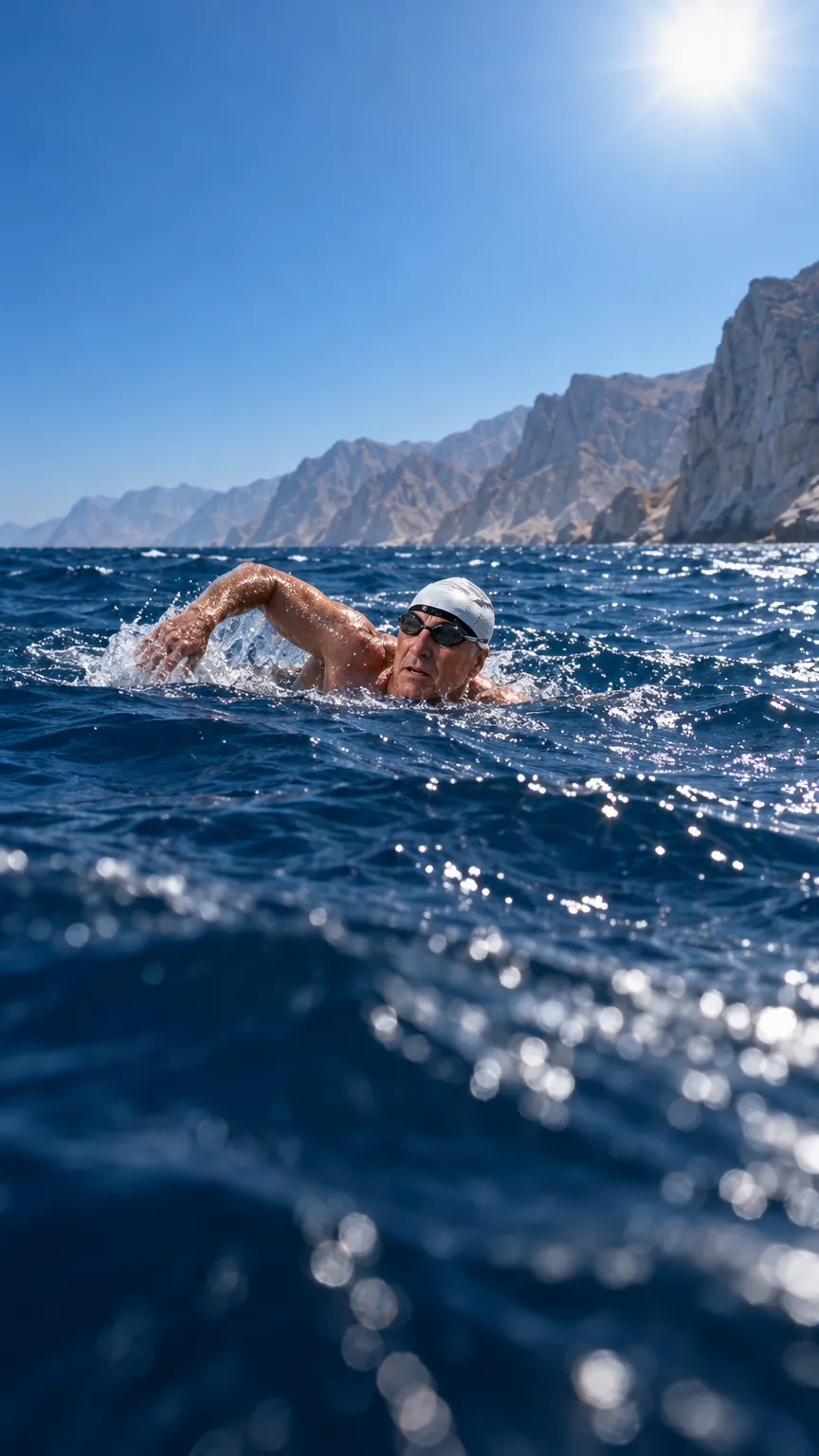
British endurance swimmer Lewis Pugh has completed a three-day swim of about 15km through the Strait of Hormuz, from Musandam Island to the Cape of Hormuz at the northern tip of Oman's Musandam Peninsula. He is thought to be the first person to attempt a long-distance swim there since the conflict involving Iran began in March.
On the first day, his foundation says a projectile hit an oil tanker around 4km from where he was in the water. The next day he saw flames from the liquefied petroleum gas carrier Tara Gas, and later swam close to the vessel while it was still on fire. Maritime reports say the Panama-flagged ship was hit twice in the strait, forcing its crew to abandon it. Omani authorities evacuated seafarers from the burning tanker off Musandam, and a search was launched for a missing Indian crew member.
Pugh, who is the UN Patron of the Oceans, used the swim to warn that environmental damage in wartime often receives little attention and can last long after fighting ends. The waters of the strait support dugongs, sea turtles and whale sharks. He has raised concerns that oil spills and similar incidents could harm coral reefs, seagrass and mangroves in the area.
Why it matters
The Strait of Hormuz is one of the world's main energy chokepoints, with the US Energy Information Administration estimating that oil flows through it in 2024 and early 2025 made up more than a quarter of global seaborne oil trade and about a fifth of world oil and petroleum product consumption. Attacks like those on the Tara Gas show how quickly a security crisis can become a human emergency for crews and an environmental threat for a fragile marine ecosystem. By placing his swim alongside an active tanker fire and a missing seafarer, Pugh links the global concern over fuel supplies to the longer-term risks to coastal habitats and the people working on the ships that carry that fuel.
The context
- The US Energy Information Administration says oil flows through the Strait of Hormuz in 2024 and early 2025 made up more than a quarter of global seaborne oil trade and about a fifth of world oil and petroleum product consumption.
- The Tara Gas, a Panama-flagged LPG carrier, was hit in the Strait of Hormuz and hit again the following day, according to maritime reports; its crew had to abandon the ship.
- Oman evacuated crew from the burning tanker off Musandam, and a search was under way for a missing Indian seafarer.
- In 2022 Pugh became the first person to swim the length of the Red Sea, a 123km swim over 16 days, to draw attention to coral reefs.