Yorkshire declared in drought after months of low rainfall
The Environment Agency has moved Yorkshire into drought after one of its driest April-to-September periods on record, with rivers, groundwater and reservoirs across England already well below normal levels.
- The Environment Agency declared drought in Yorkshire on 9 October 2026.
- Yorkshire had its fifth driest April to September on record, with very low river flows and groundwater.
- Yorkshire is the 11th Environment Agency area in drought and its third drought in five years.
- Ten water companies have hosepipe bans, but Yorkshire Water remains at drought level 1 with no ban.
What happened
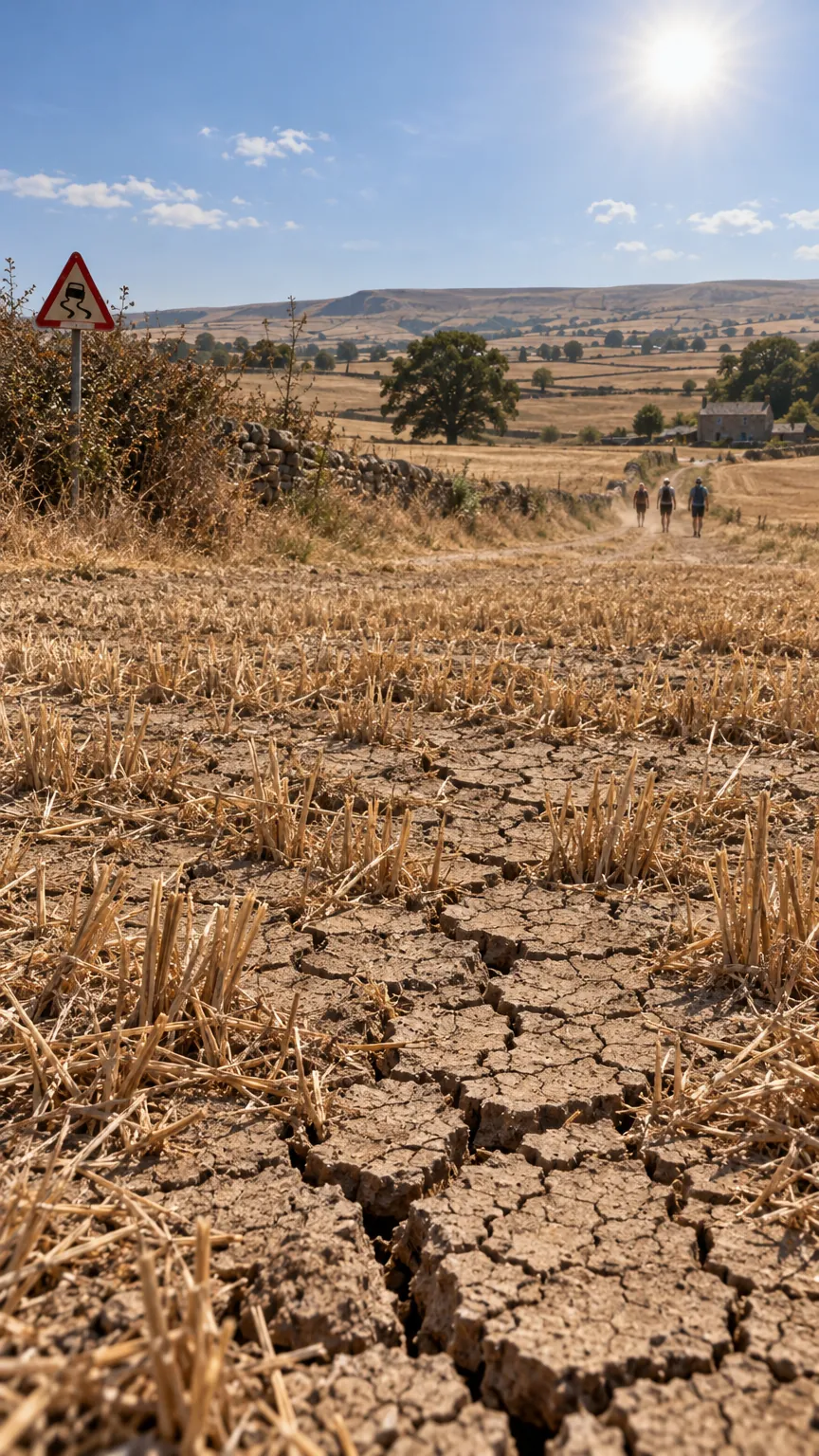
The Environment Agency declared a drought in Yorkshire on Friday 9 October 2026. The region had its fifth driest April to September on record, and river flows and groundwater in parts of the area had fallen to the agency's drought trigger levels. Yorkshire had already been classed as having "prolonged dry weather" since the end of July.
Recent rainfall has not undone the impact of a very dry spring and summer, according to the agency. It said a short spell of wetter weather cannot quickly offset the deficit built up earlier in the year. At the end of August, Yorkshire's reservoirs were 49% full, around 20 percentage points below the long-term average, and river flows in the western Pennine catchments were between 19% and 42% of normal.
The Environment Agency said it is handling drought permit applications from water companies at speed. These permits allow companies to release less water into local rivers. The agency is also stepping up checks on people who take water from rivers, and the government and regulator have said they will ensure water companies follow their drought plans, repair leaks promptly and work to cut demand. The public has been asked to use a little less water, but no hosepipe ban has been announced for Yorkshire. Yorkshire Water remains at drought level 1 in its Grid zone.
How our readers reacted
Only a few readers saw this story on our social channels. Those who did were mainly interested in how water is shared around the country and how drought links to flooding issues.
Why it matters
Yorkshire is now the 11th Environment Agency area in drought, and this is its third drought in five years, after 2022 and 2025. The declaration comes as England's reservoirs are, on average, 54% full, which is 21% below the normal level for early October, with eight reservoirs or reservoir groups classed as exceptionally low. Ten water companies, including Thames Water, Anglian Water and Southern Water, already have hosepipe bans in all or part of their areas, while Yorkshire Water does not. Government-cited research suggests drought-hit areas would need about 120% of typical rainfall over the next seven months to recover, meaning the current shortages could continue into 2027 if that extra rain does not arrive.
What happens next
- 12 Oct 2026: The National Drought Group, which brings together government, regulators, the Met Office, water companies and farmers, meets on 12 October and again on 19 October.
The context
- In the week of 2 to 8 October 2026, England's reservoirs were 54% full, 21% below the normal level for the time of year. Eight reservoirs or reservoir groups were classed as exceptionally low.
- With Yorkshire added, 11 Environment Agency areas are in drought. Three more, the North East, Cumbria and Lancashire, and Greater Manchester, Merseyside and Cheshire, are in prolonged dry weather status.
- Ten water companies, including Thames Water, Anglian Water and Southern Water, have hosepipe bans in all or part of their areas. Yorkshire Water remains at drought level 1 in its Grid zone.
- Yorkshire's reservoirs were 49% full at the end of August 2026, 20 percentage points below the long-term average. River flows in the western Pennine catchments were between 19% and 42% of normal.
- Yorkshire has had three droughts in five years: 2022, 2025 and 2026. Research cited by the government says areas would need 120% of average rainfall over the next seven months to come out of drought.
Readers mostly talked about water distribution and flooding issues.
Readers are talking about this story under our posts. Add your view.