London given ‘C’ grade for air quality in European city ranking
Campaign group Clean Cities has ranked London 16th out of 40 European cities for air quality. The city has cut pollution in recent years but still falls short of tougher EU limits due in 2030.
- Clean Cities ranked Greater London 16th of 40 European cities for air quality.
- The group said London would fail all four measures in the EU’s stricter 2030 air standards.
- Diesel vans and limited protected cycle lanes were highlighted as major obstacles to cleaner air.
- City Hall says nitrogen dioxide and fine particle levels have fallen sharply since 2016-18.
What happened
Campaign group Clean Cities has ranked Greater London 16th out of 40 European cities for air quality, giving it a "C" grade. Cities including Copenhagen, Amsterdam, Berlin and Brussels were placed ahead of the capital. The group said that, measured against the European Union’s tighter air standards due from 2030, London would currently fail on all four indicators.
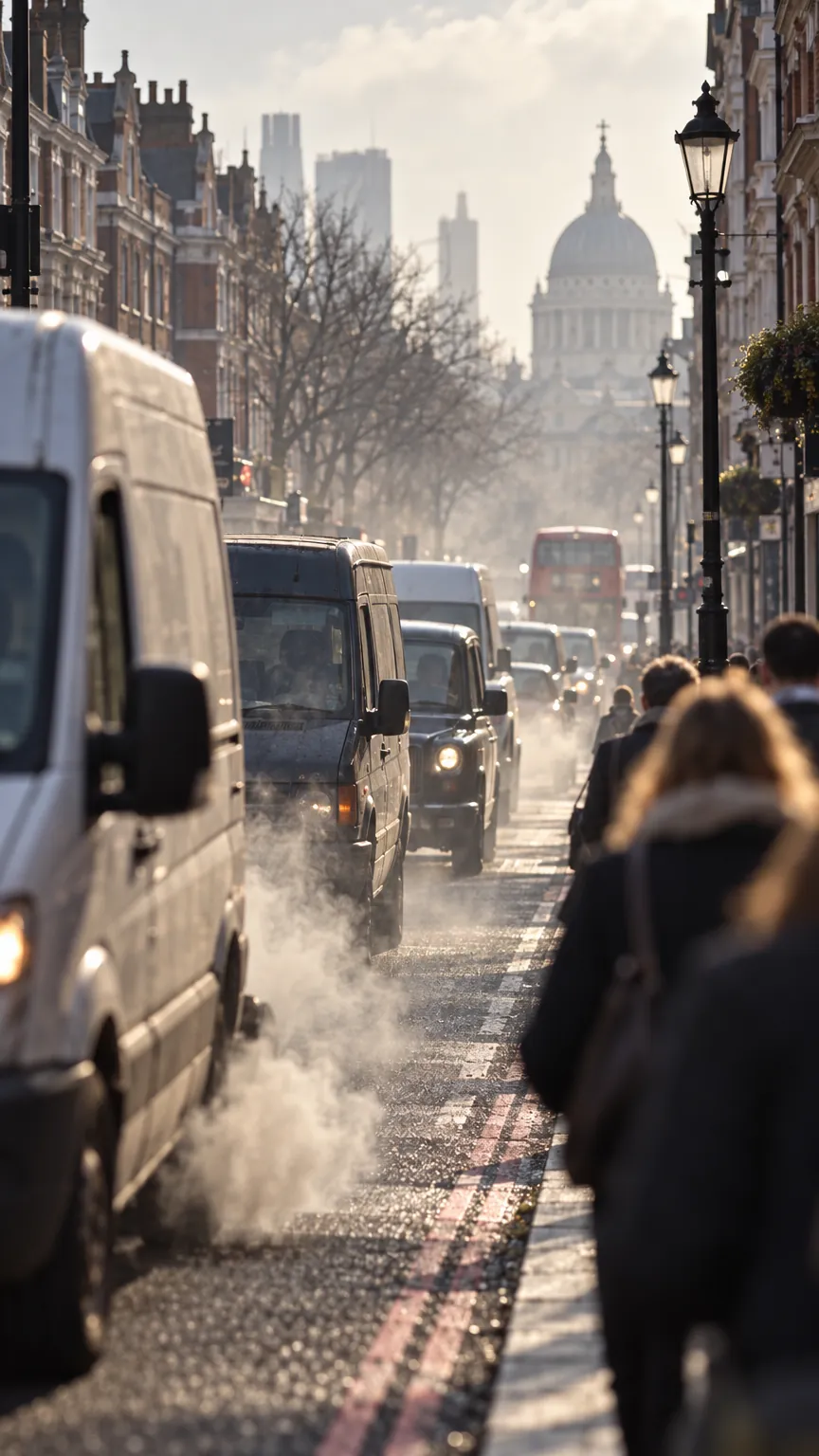
The report highlighted diesel vans as a major obstacle. Using Department for Transport figures, it said there were more than 100,000 company-owned diesel vans registered in London at the end of 2025, compared with fewer than 6,000 battery-electric vans. It also found that only 12 per cent of London’s main roads have protected cycle lanes, far below Copenhagen’s 73 per cent. Clean Cities urged the Mayor to press on with electric vehicle policies, tougher rules for freight, more School Streets and faster bus electrification.
The study also credited City Hall with progress. It said nitrogen dioxide levels fell by 46.3 per cent and fine particle pollution by 27.1 per cent between 2016-18 and 2023-25. The Mayor’s office said London’s air is much cleaner than a decade ago and pointed to plans for 200 more School Streets by 2030. Conservatives at City Hall argued the Mayor had overstated the impact of his policies, while Greens said further action was needed.
Why it matters
The ranking shows how far London still has to go under new European rules, even after recent improvements. The EU’s revised air quality directive, in force since December 2024, cuts the legal annual limit for nitrogen dioxide from 40 to 20 micrograms per cubic metre by 2030, and for fine particles (PM2.5) from 25 to 10 micrograms per cubic metre. City Hall says London only came within the current 40 microgram nitrogen dioxide limit in 2024, so meeting the new standard will mean roughly halving pollution again. The planned EU PM2.5 limit is still higher than the World Health Organization’s guideline, underlining that London is being measured against rules that are themselves a compromise rather than the strictest health advice.
The context
- The EU's revised air quality rules came into force on 10 December 2024. They set tighter limits to be met by 2030, and member states have two years to write them into national law.
- Under the revised directive, the 2030 annual limit for nitrogen dioxide falls from 40 to 20 µg/m³, and for PM2.5 from 25 to 10 µg/m³.
- The new EU PM2.5 limit of 10 µg/m³ is still double the World Health Organization's 2021 guideline of 5 µg/m³.
- City Hall says London's air pollution fell within the legal limits for nitrogen dioxide for the first time in 2024.