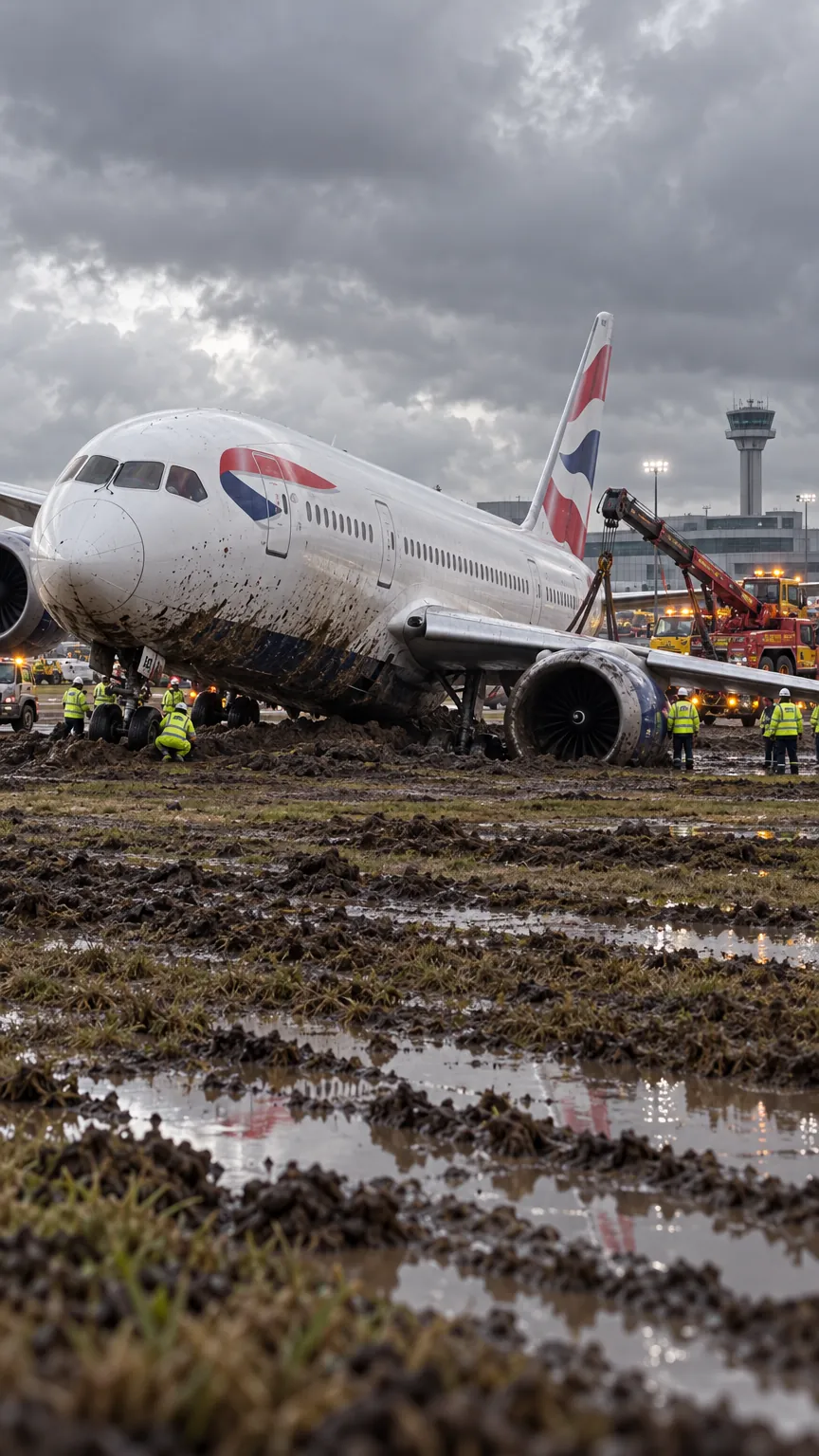
BA Dreamliner stuck in mud after Heathrow taxiway slip
A British Airways Boeing 787-10 left a taxiway at Heathrow and became stuck in mud, cancelling a Lagos flight. Similar low-speed taxiway incidents in the UK have previously led to safety investigations into lighting and taxi speeds.
- A British Airways Boeing 787-10 left a taxiway at Heathrow on Tuesday morning.
- The Lagos-bound flight, due to leave at 10.40am, was cancelled.
- Heathrow said no one was injured and wider airport operations were not affected.
- Emergency services attended and Heathrow worked to move the aircraft back to a stand.
What happened
A British Airways Boeing 787-10 Dreamliner left a taxiway at Heathrow Airport on Tuesday morning and ran onto a grass verge. Its nose wheel sank into the mud. The aircraft had been scheduled to operate the 10.40am service to Lagos, Nigeria, with witnesses telling the Evening Standard that about 215 passengers were on board.
Emergency services surrounded the aircraft and the flight was cancelled. Hours later, the jet was still reported to be stuck on the grass. Heathrow said it was helping to move the aircraft back to a stand. The airport said no one was injured and that wider operations were not affected. British Airways apologised to passengers and said its teams were working to get them on their way.
Why it matters
Taxiway excursions like this are usually low-speed events, but they can still damage aircraft and disrupt airport movements. The UK’s Air Accidents Investigation Branch has investigated similar incidents at Heathrow and other airports, highlighting how small changes in conditions can lead to an aircraft leaving paved surfaces. In one 2002 case at Heathrow, an Airbus A330’s main landing gear went onto grass after resurfacing works removed centreline lights and the commander, who had not received the notice about the change, became unsure of the taxiway line. At Birmingham in 2016, an Airbus A320 ran onto grass after a 90-degree turn was taken too fast on a damp surface, causing the nose wheels to skid. At Southend in 2022, a Boeing 737’s main gear left the taxiway during a tight turn when the crew believed they were joining a wider route. These past investigations show how factors such as missing lighting, speed in tight turns and misjudging taxiway layout can all play a part when an aircraft strays off a taxiway.
The context
- In December 2002 an Airbus A330 taxiing at Heathrow ran its right-hand main landing gear onto grass. Resurfacing work had removed the green centreline lights, leaving only blue edge lights, and the commander became unsure where the centreline was.
- The AAIB found that the commander of the 2002 Heathrow A330 had not received the NOTAM (notice to aircrew) about the works affecting the taxiway lighting.
- At Birmingham Airport in 2016, an Airbus A320 took a 90-degree taxiway turn too fast on a damp surface. Its nose wheels skidded and the aircraft ran onto the grass.
- At Southend, a Boeing 737's right main gear left the paved taxiway during a 90-degree turn. The AAIB gave the probable cause as the crew wrongly believing they were turning onto a wider taxiway.