Oxford Street traffic ban: how buses and deliveries will change
Ten day and night bus routes will move off a 1km stretch of Oxford Street when it closes to traffic on 26 October. Deliveries will be limited to overnight hours, with most daytime loading moved to nearby streets.
- Oxford Street between Orchard Street and Great Portland Street closes to traffic from 26 October.
- Ten bus routes will be diverted or cut short, with new stops on nearby streets.
- Delivery vehicles may enter the traffic-free section only between midnight and 07:00.
- Daytime deliveries must use loading bays on surrounding streets instead of Oxford Street.
What happened
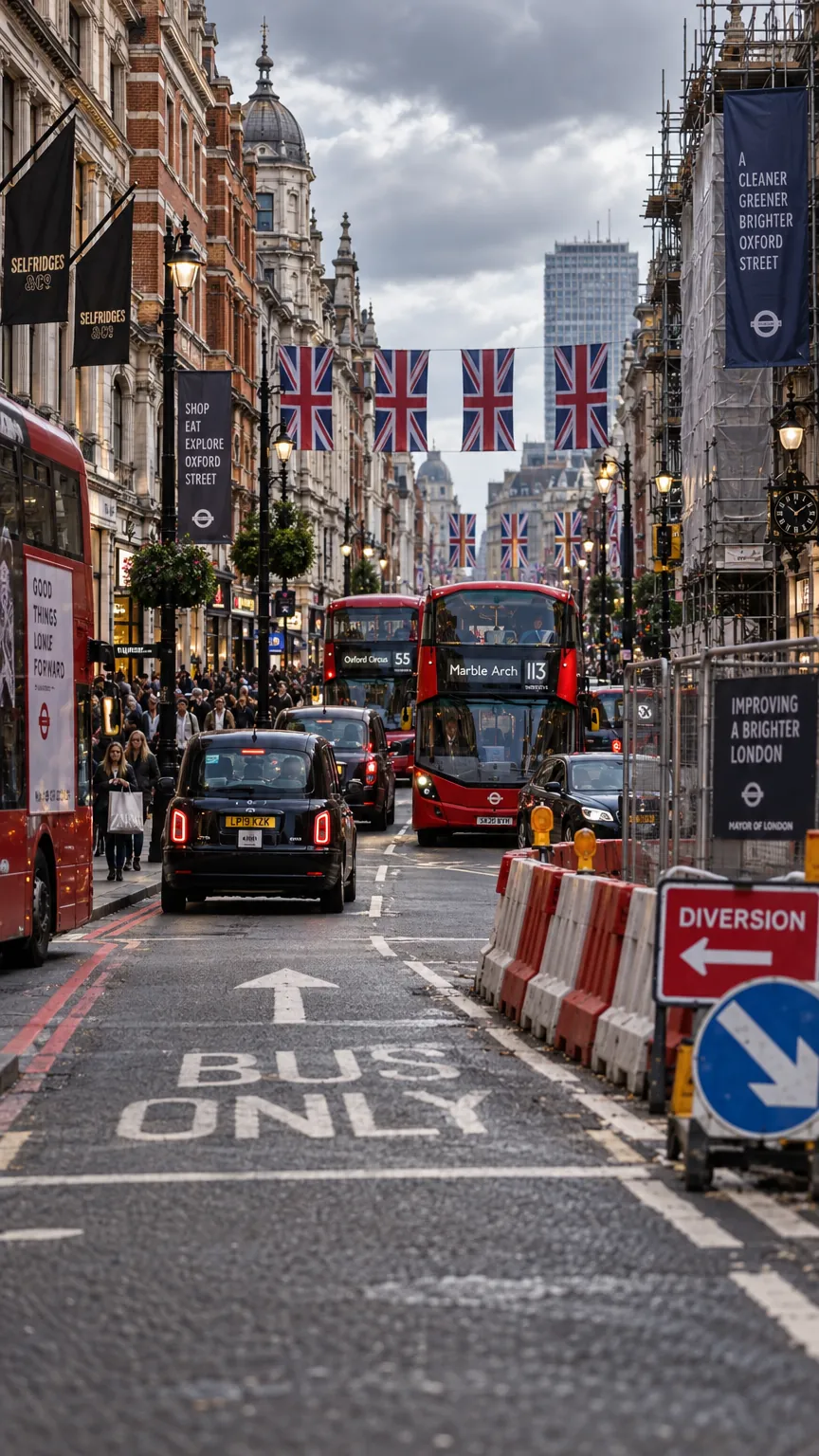
The western section of Oxford Street, from Orchard Street near Selfridges to Great Portland Street just east of Oxford Circus, will become traffic-free from Monday 26 October. From 07:00 to midnight each day, buses, taxis, cyclists and other vehicles will be barred from this 1km stretch. Buses will stop using it from the evening of Sunday 25 October.
Ten routes are affected. Daytime services 7, 94, 98, 139 and 390, and night routes N7, N98, N113, N137 and N207, will either terminate around Marble Arch or divert along nearby streets. New stops are being added on Wigmore Street, Henrietta Place and Cavendish Place, with a temporary eastbound route via Wigmore Street and Regent Street while works around Cavendish Square continue. Emergency vehicles and mobility scooters will still be able to use Oxford Street at all times, and Tube and rail services are unchanged.
Deliveries and servicing are being reorganised. Vehicles will be allowed into the traffic-free section only between midnight and 07:00, when pedestrian numbers are low. At other times, businesses will need to use loading bays on surrounding streets for deliveries, servicing and waste collections.
How our readers reacted
A small number of readers focused on how pedestrianisation would affect deliveries, policing and access for workers. They mainly questioned how shops would receive stock, how tradespeople would reach jobs and how police would move suspects, and they also raised broader criticisms of the mayor and city leadership.
Why it matters
Oxford Street is one of London’s busiest bus corridors, so diverting ten routes means many passengers will have new stops or shorter journeys, often around 200 metres from the closed section. For shops and other businesses, the shift to overnight access and side-street loading changes how stock, servicing and waste are managed each day. The scheme follows a February 2026 mayoral decision approving Transport for London’s plans after 2,716 consultation responses, and is backed by enabling works and workshops to help firms adjust. It marks a move from daytime traffic restrictions that already applied to most vehicles towards a largely pedestrian-focused street for most of the day, overseen by the Oxford Street Development Corporation.
What happens next
- 25 Oct 2026: Buses are withdrawn from the stretch and diversions begin on the evening of Sunday 25 October.
- 26 Oct 2026: Oxford Street between Orchard Street and Great Portland Street becomes traffic-free from 07:00 to midnight daily.
The context
- Sadiq Khan approved TfL's plans to pedestrianise Oxford Street between Great Portland Street and Orchard Street in a mayoral decision signed on 26 February 2026. TfL's consultation received 2,716 responses.
- Before this scheme, private cars, motorcycles and goods vehicles were already barred from this part of Oxford Street from 7am to 7pm, Monday to Saturday. Buses and taxis could still use it.
- Delivery and servicing vehicles may enter the traffic-free section between midnight and 07:00, when pedestrian numbers are low. Deliveries between 07:00 and midnight must use loading bays on surrounding streets. Emergency services can get in at any time.
- TfL began enabling works in September 2026. It is running in-person and online workshops to help businesses keep their deliveries, servicing and waste collections going after the closure.
- A new body, the Oxford Street Development Corporation, was set up on 1 January 2026 to carry out the Mayor's plans for the street. Its 2026-27 budget includes the expected costs.
Readers mostly talked about pedestrianisation impact and mayor criticism.
Readers are talking about this story under our posts. Add your view.